Three 20-something women trying to figure out what it means to be lay, Catholic, and modern all at once.


Showing posts with label art. Show all posts

May 3, 2010

Magdalene in Art: Stained Glass


From St. Louis Betrand Parish, Louisville KY.

April 14, 2010

Sacred Made Real


As Edith mentioned yesterday, right now the three of us are FINALLY all together in Washington. This two week stint has been a lot of fun--encouraging, edifying, and rather silly. Last weekend we took the time to visit a remarkable exhibit here in Washington, called The Sacred Made Real: Spanish Painting and Sculpture, 1600-1700.

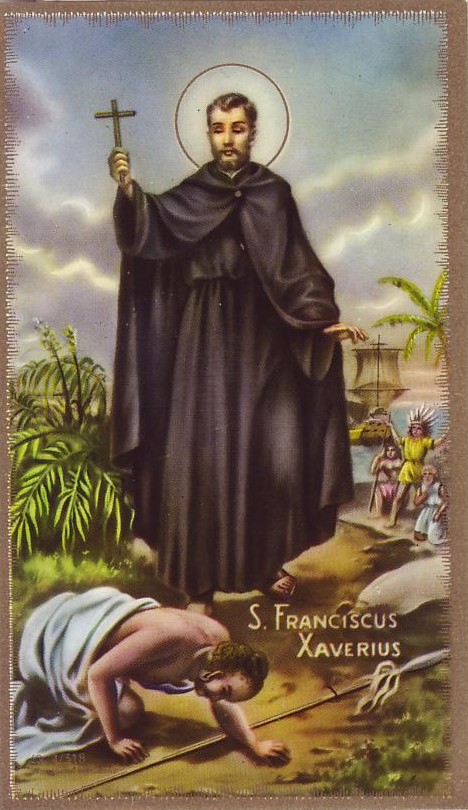
The exhibit is small--less than 30 pieces. (The London Exhibit was twice as large.) There are as many pieces of sculpture as there are paintings; the sculpture is a special poly-chrome sculptures: painted wood, life size (for the most part) and active. I don't know how else to describe it--like all baroque art there is a tremendous amount of motion in these statues. We catch St. Francis just as he is raised in ecstasy, and Christ, covered in sores, bruises and blood, approach the throne of Pilate.

Each piece was stunning, and there was much debate about which was the best. But, I'm certain, we all fondly recall this statue of Magdalene. It was a total surprise, and the three of us stood in front of it for a good 30 seconds, together. I know I was praying for each of them, and it was so good to stand by their side, captivated, and lost in wonder.

August 10, 2009

The Ring of Fire

I told him I wanted to take things slow; he told me he loved me. I stayed silent, pulled away. He pressed me again, saying "I love you," and I only responded, "Yes. I heard you." That obviously wasn't the answer he wanted, so we turned, and continued walking up the dark silent street.

I was confused, excited, flattered, but I don't think I was in love yet. I wasn't even sure what "I love you" really meant--though maybe that was part of my problem. I over-thought rather than felt. I certainly loved being with him; kissing him; wandering and adventuring with him. He was new, different, older, but still silly, light, and carefree. He wore hats, liked Dickens and Johnny Cash, and seemed to know everything about our city. And, he saw something in me he liked. Or "loved," apparently.


But I remember that night very clearly, because, as we walked towards the park, I started to tell him about the mosaics in the Mausoleum of Galla Placidia, in Ravenna, Italy. We had studied that building in class earlier that day, and it stirred something deep inside me, a passion I wanted desperately to share:
The building was plain brick on the outside, with very few windows. An unremarkable building, except of course for the fact that it was built in 430 AD, and is still standing, it reminded me of old train stations in gritty Pennsylvania towns. But it was like a jewel box inside—covered with the most brilliant shining mosaics. One showed St. Lawrence and his grill, another showed the good shepherd. And the colors! Oh, dear, they were so beautiful. It took my breath away: bright blue, shimmering gold, soft whites, and dangerous reds and oranges. . . I was thinking, wouldn’t it be wonderful to study art history? Every painting is a new story, a new life, a new beauty. And I could spend my life studying them—wouldn’t that be wonderful?


I am sad to say, he only scoffed. I can’t remember what he said, but he thought the idea was foolish, a waste, no more than a silly dream of a school girl who had no sense of reality or familial, worldly burdens. I think he even thought it was a waste intellectually. I was crestfallen, dropped the subject, and we continued walking. But for the nine months of our relationship I didn’t let myself consider a future in the arts, and by the time we broke up, and I got over it all, I was on a very different path.

The fact is, I was a silly school girl--but my innocence and my ideals certainly didn’t need to be squashed. Now it has been a long time since I dated him; years since I have seen him. And I am older, wiser, more prudent. I can remember the fire--fire is the usual word for it, though I don’t think it is apt--that made me smother some of my dreams for the sake of the ones we built together. But none of those dreams came to pass; and now my older wiser self looks as that “fire” and rejects it. I remember being moved; I remember passion and thrill and excitement; but I don’t understand it.


At the center of all this stands St. Lawrence, who's feast day is today. A deacon and martyr of the Early Church (he died in 258 AD), he was burnt alive on a grid-iron. He is a favorite of school-kids, since he (apocryphally?) said as he was roasting away, “Turn me over, I’m done on this side.” He is the patron of firefighters, naturally, and of cooks, deacons, and comedians. (He is also a patron of librarians and archivists, because he was the “keeper of the treasures of the church” while Christianity was outlawed in Rome in his lifetime.) To me, he will always represents the real fire of love: an all consuming passion for Our Lord that drives us to do any number of rash and foolish things, like laughing in the face of death, and finally, giving up our lives for another. Is it possible to have that sort of love for another human being? Is it even good?

He told me he loved me; eventually I told him the same. We were sincere; we were naive; we were honest. But I don’t think either of us really knew what "love" meant.


(All photos of the Mausoleum from Wikipedia or Sacred Destinations.)

July 22, 2009

The Feast of St. Mary Magdalene

Today is the feast of St. Mary Magdalene, our dear and beloved patron. There is so much I planned to say on this day, but now that it is here, I am overwhelmed, and can't manage much. So, instead, I'll share with you this beautiful series of paintings by Georges de La Tour or the repenting and repentent Mary Magdalene. They are in chronological oder, and I would love to know which you love most. Someday soon I hope to let you know a bit more about all of them.

The Magdalen with the Smoking Flame


Magdalen of Night Light


The Penitent Magdalen


The Repentant Magdalen


(The Magdalen with the Smoking Flame is in the Los Angeles County Museum of Art. Magdalen of Night Light is at the Louvre Museum in Paris. The Penitent Magdalen is at the Metropolitan Museum of Art in New York. The Repentant Magdalen is in the National Gallery of Art in Washington, D.C.)

July 7, 2009

Courage in Art


Yesterday was the feast of St. Maria Goretti, and you should check out Julian's thoughts about this amazing saint, posted yesterday. Meanwhile I wanted to share with you a quick thought and a link.

When I realized it was her feast day yesterday morning, I went immediately to do a Google Image Search of her name to find an icon that we could put up on the blog. Aside from a grainy image of her incoroupt body, the only images I could find were in the sappy wide-eyed innocent holy card style. I grew up with those images, and I love them in a way, but they never do her, or any saint justice.

Of course I also grew up hearing the story of St. Maria Goretti repeated, as it is often done to catholic school girls, to me and my friends. But it wasn't until college, when a feisty Dominican professor told us on the verge of tears the story of her martyrdom that I really was moved by her life and death. He told a story of bold, almost rash, courage which defied the world and its false promises, and then, when victorious, turned gentle and gracious. I didn't look around when he finished the story, but I was certain there wasn't a dry eye.

So when I look at those sickly/innocent drawings of a little girl, I see none of her strength. St. Maria Goretti is all the more remarkable for having been a young girl when she died. But she was no child--she was more adult, and yet more innocent, than I will ever be, and to think of her as a sweet little school girl is to miss the point.

Then, stumbling through Google Images, I came across this stunning painting, by Noah Buchanan for the Shrine of Our Lady of Guadalupe, in Lacrosse, Wisconsin. Maria Goretti stands, facing us, engaging our eyes, in front of the Blessed Virgin Mary. But most striking of all is Allessandro Serenelli, her murderer, bound on the floor, reaching up to the lily Maria is giving him. This painting, to me, tells the whole story, with its pain, its grace, its strength, and its love.

April 27, 2009

The Goodness of God and His Mother

As many of you may know or have by now guessed, I am a graduate student. Every day for the past four years, I've been going to the same coffee shop. Outside that coffee shop every morning is this old man, pretty short, who sells prints of his drawings for $10 each. Now, he's a grumbling old man, usually spouting curse words under his breath and grumbling at the passers-by who don't stop to purchase one of his drawings (which, I might add are quite good - he does portraits.)

Now, being one who does not often carry much cash, I have not stopped to buy a picture, but instead every time I see that man, I prayed a 'Hail Mary' for him. He's not a religious person, and from what I had heard about him (there are always stories about neighborhood characters - and this coffee shop has plenty of them!), he was particularly hostile to Mary, so I prayed all the more. Well, last week I just happened to have exactly the price for a drawing. I saw him walking away from the coffee shop and went running after him. "Excuse me, sir! Are you selling your pictures today?" His face softened immediately as he took out his drawings. He lovingly showed me his portrait of Einstein and the Mona Lisa, both of which were quite good.

Then he said, "I have a Madonna and Child. I have a Madonna and the Child Jesus." As soon as those words left his lips and before I even saw the picture I replied, "That's it, I must have that one." He seemed a little surprised that I was so conclusive but I was so happy with it. And he dates each print when he draws it -- Virgin and Child had been done just this year. The painting is an answer to my prayers for this man -- four years of prayer. God really does place things in our hearts for a reason, and even though I don't entirely know this man's situation, I have been moved to pray for him.

Now, we say hello and chat each morning. Of course, he wants me to continue buying portraits, which I plan to do little by little. But today, I bought him some coffee and as I was leaving he said, "Someday, I'd like to draw you. Would you model for me?" I smiled - "Of course, I would love that." And I do.

April 19, 2009

Noli Me Tangere (8)


by Alexander Ivanov, 1834-1836

This concludes my Easter Week series, but I will be posting more art, probably weekly, that has Mary Magdalene as its subject, in the future.

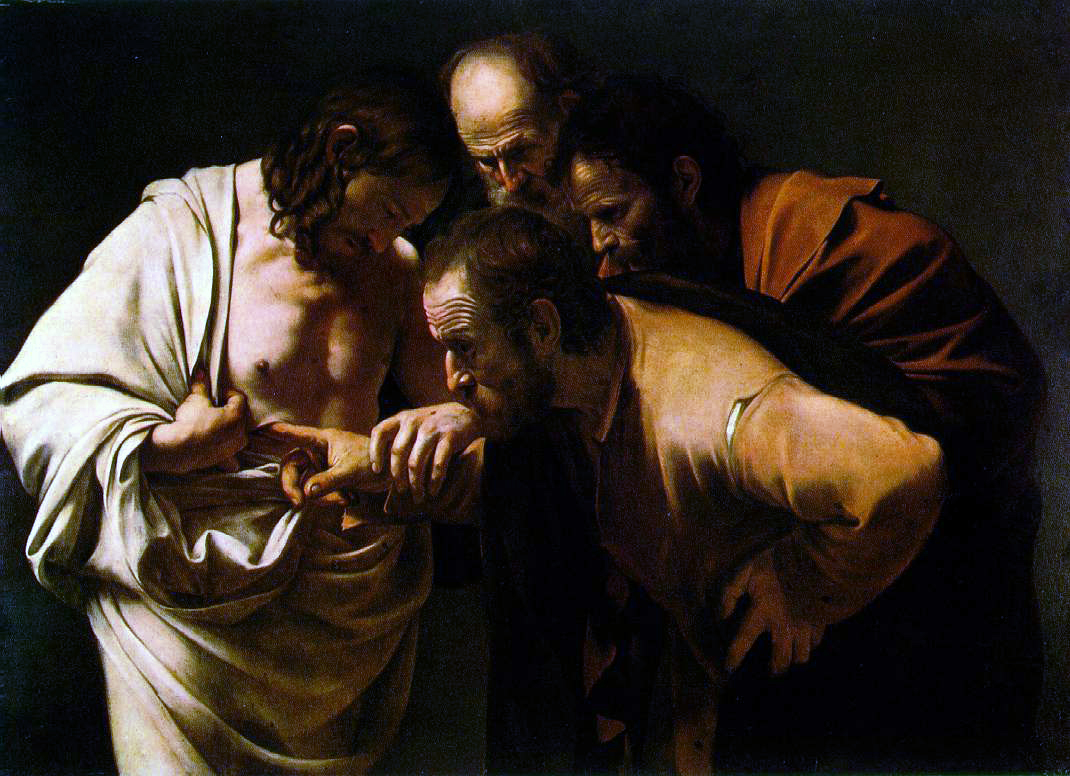
To the commentor who asked about art of the Resurrection, here is a fascinating article discussing relatively modern images of the Resurrection. It's true, it went out of fashion to show Christ Resurrected, instead the Early Christians moved towards the icon of the cross (perhaps as consolation during persecution). Still, there are often images of Christ the King, the judge, enthroned, or images from the gospel scenes following the Resurrection in churches, especially in carvings and stained glass windows. As painting became less devotional (after the renaissance), painters started to focus on some of the really rich scenes in the Gospel following the death of Christ. Two of my favorite examples, highlighted in the article, are Eugene Burnand's "The Disciples Peter and John Running to the Sepulchre, and, of course, Caravaggio's Doubting Thomas.

April 18, 2009

Noli Me Tangere (7)


by Titian, 1511 (I should have put this earlier in the week...)

April 17, 2009

Noli Me Tangere (6)


Antonio Correggio, 1525

April 16, 2009

Noli Me Tangere (5)


Hans Holbein, 1524

April 15, 2009

Noli Me Tangere (4)


(my favorite) Fra Angelico, from the Convent of San Marco, in Florence. Circa 1440.

April 14, 2009

Noli Me Tangere (3)


Guariento di Arpo, circa 1344.

April 13, 2009

Noli Me Tangere (2)


From the Magdalene Chapel, by Giotto, in the Lower Church of St. Francis of Assisi, in Assisi, circa 1320.

April 12, 2009

Noli Me Tangere


But Mary stayed outside the tomb weeping. And as she wept, she bent over into the tomb and saw two angels in white sitting there, one at the head and one at the feet where the body of Jesus had been.

And they said to her, "Woman, why are you weeping?" She said to them, "They have taken my Lord, and I don't know where they laid him."

When she had said this, she turned around and saw Jesus there, but did not know it was Jesus.

Jesus said to her, "Woman, why are you weeping? Whom are you looking for?" She thought it was the gardener and said to him, "Sir, if you carried him away, tell me where you laid him, and I will take him."

Jesus said to her, "Mary!" She turned and said to him in Hebrew, "Rabbouni," 9 which means Teacher.

Jesus said to her, "Stop holding on to me, for I have not yet ascended to the Father. But go to my brothers and tell them, 'I am going to my Father and your Father, to my God and your God.'"

Mary of Magdala went and announced to the disciples, "I have seen the Lord," and what he told her. John 20:11-18

Noli Me Tangere, by Duccio di Bouninsegna, 1308-1310
*During the Octave of Easter, I will be posting a different artists representation (in chronological order, oldest to newest), of this powerful scene of Easter Morning.

April 9, 2009

A Beautiful Story


This past week, I went on a hiking trip with some friends. We got into a discussion about our faith, and one of my friends told me about this young child artist and poet, Akiane. She even let me borrow a book about her, and I've not been able to put it down and I've been sharing it with everyone since. Wow, just wow. This little lady was born to a self-consciously atheist family and at age 4 began to have visions and dreams of God, heaven, Mary, and the angels. God inspired this young lady to draw and to paint. He guided her progress from pencil sketches at age 4 to color paintings and poetry beginning at about age 7. She is now 13. Each painting has a poem to go with it and in her book, she describes each painting.

I have several favorites, but one of them is called "Resurrection: Prince of Peace." It is a painting of the risen Christ found here. She says that she painted half His face in light to show the glory of His Resurrection and half of it dark to show His suffering on earth. What's even more beautiful is the story of the model for this painting. Akiane had been inspired to paint God's face, but needed the perfect model. She prayed and prayed and finally a family friend brought over to the family house a man -- this man--who is a carpenter. Akiane knew he was the model. I fell in love with painting instantly.

Her portrayal of Mary is also so beautiful. She explains that Mary's role was so unique: she had to protect and raise the Savior. And I love the one of this African American woman and her child (seen above and found on the site here. Her caption to this painting?? She says: "So many children have been lost through war, famine, slavery, kidnapping, crime, disease, accidents, suicide, miscarriage or abortion. When a child is gone, the only joy left is the memories and faith that we will see them again, and we will."

Wow, just wow. "Out of the mouths of babes and sucklings thou hast brought perfect praise...."

April 7, 2009

The Alabaster Jar

Last Sunday we had the pleasure (and, lets be honest, pain) of reading the Passion of Christ according to St. Mark. It starts with one of the most powerful scenes in the life of our patron, Mary Magdalene*:

When he was in Bethany reclining at table
in the house of Simon the leper,
a woman came with an alabaster jar of perfumed oil,
costly genuine spikenard.
She broke the alabaster jar and poured it on his head.
There were some who were indignant.
"Why has there been this waste of perfumed oil?
It could have been sold for more than three hundred days' wages
and the money given to the poor."
They were infuriated with her.
Jesus said, "Let her alone.
Why do you make trouble for her?
She has done a good thing for me.
The poor you will always have with you,
and whenever you wish you can do good to them,
but you will not always have me.
She has done what she could.
She has anticipated anointing my body for burial.
Amen, I say to you,
wherever the gospel is proclaimed to the whole world,
what she has done will be told in memory of her."


There is so much to unpack here, I hardly know where to begin. What strikes me about St. Marks' version today is the universal justness of honoring Christ.

A colleague, who has travelled extensively in Eastern Europe, showed me a bunch of her photographs of Orthodox churches and cathedrals. They were ornate, with onion domes and gilding--even the smallest of churches were full of architectural glory. She said to me: these are the poorest of the poor, and they put all their money into their churches. Then she said, "But I hated Rome. I have no time for Rome, when they sit their among their gaudy marble cherubims, and talk about 'poverty' and 'world hunger.' Sell one of those statues, and feed the poor." I invoked this story in the Gospel (it felt good to quote the bible to a Protestant, I must say).

The poor, indeed, are always with us, and we can always do good for them. I take this to mean two things: we can always serve the poor, and, no matter how many marble cherubims we sell, we'll never solve their poverty; there will always be more people who are poor.

Christ also says that it is good for us to honor him: "She has done a good thing for me...She has done what she could." This story, in the literal narrative, is a precursor to the mournful anointing by Mary, Mary Magdalene, and Joseph of Arimatheia, after Christ has died. Christ reminds us that he will not always be with us, to prepare us for his devastating absence after his death. Now we know, Christ IS Risen. How much more important is it then to honor him through our churches.

According to the old traditions of the Church, on Palm Sunday, the images of Christ, and the statues, and even the processional cross, are covered with purple cloth. The only thing I could focus on during mass was the golden tabernacle, the house of Our Lord. On Thursday, we will remove the Eucharist from that Tabernacle, and strip the altar, and on Friday, after journeying with Christ on the via crucis, the church is left entirely empty and dark. Then, at the Easter Vigil, we bring the light into the dark empty church to find it filled with glory--flowers and light and the statues are uncovered and it seems the entire world is celebrating the Resurrection. I am always so glad for the riches of the church at that moment.

The humblest and poorest of the poor scimp and save to build houses worthy of our Ressurrected Lord, and so should we. But we must also perpare our hearts. Poverty of spirit is not an emptiness (like the cold and empty church, or St. Peter's stripped down to its bones). May we practice a poverty of spirit in our hearts, so that when Christ does rise again we may honor him with full hearts.

*The Catholic Encyclopedia explains at great length the discussion of the identity of Mary Magdalene. The Greek and (for the most part) Protestant traditions count as three separate individuals Mary Magdalene, Mary of Bethany (sister to Martha and Lazarus), and the "sinner" of Luke 7. But, the Roman tradition identifies these three women as all Mary Magdalene, and since Mary Magdalene is often represented with a jar of oil, I always identify her as the woman of this Gospel. One of these days I'd like to really explore this question of the identity of Mary Magdalene, but today is not the day for it.
Related Posts with Thumbnails